Medterra Isolate vs Ultra Broad vs Full Spectrum: The THC Question, Settled
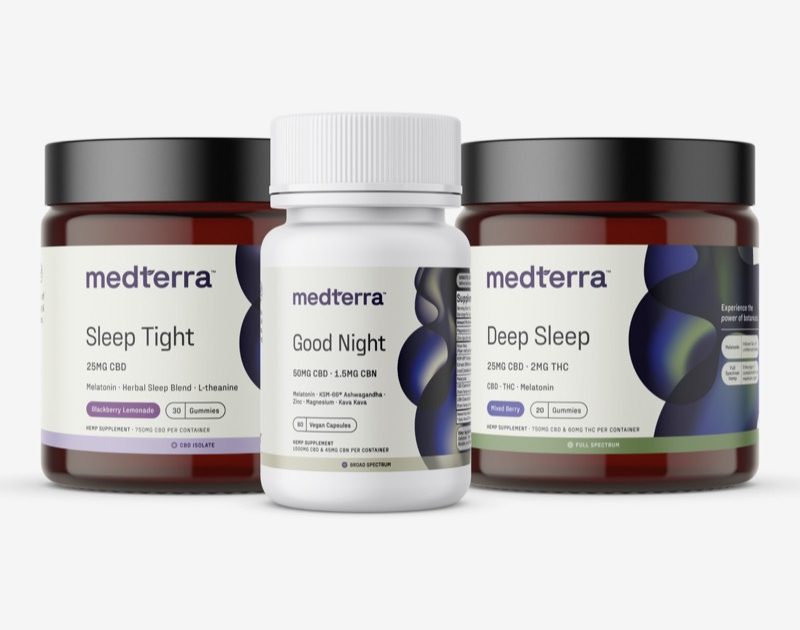
Every Medterra product forces one decision before flavor, format or price ever enters the picture: how much THC are you willing to have in the bottle? The brand answers that question three different ways. Isolate is pure CBD, third-party tested to zero THC. Ultra Broad Spectrum — Medterra calls it “CBD+” — keeps a 10:1 ratio of CBD to minor cannabinoids with the THC removed. True Full Spectrum flips to a 5:1 ratio and deliberately includes 2mg or 5mg of THC per serving.
Most spectrum explainers stop at chemistry. This one is a value matchup: which spectrum gives you the most usable effect per dollar, given your actual constraints — a workplace drug test, THC sensitivity, or the desire for the strongest possible entourage effect. Because at Medterra’s pricing, all three spectrums cost broadly similar money; what changes is what that money can and cannot legally, practically and pharmacologically do for you.
The Three Contenders
| Spectrum | THC per serving | Cannabinoid ratio | Drug-test risk | Built for |
|---|---|---|---|---|
| Isolate | Zero — third-party verified | CBD only | Lowest | Tested employees, THC-averse users |
| Ultra Broad Spectrum (CBD+) | THC removed | 10:1 CBD to minors | Very low | Entourage effect without THC |
| True Full Spectrum | 2mg or 5mg | 5:1 CBD to minors | Real | Maximum effect, no testing constraints |
All three lines carry the same trust infrastructure, which is what makes an apples-to-apples comparison possible in the first place: US Hemp Authority certification, published third-party certificates of analysis for every batch, and vegan, gluten-free, non-GMO formulation. Across formats — gummies, tinctures, capsules, topicals, even the pet line — the brand averages 4.9 out of 5 stars over 25,000+ reviews, so spectrum choice, not brand quality, is the live variable here.
Round 1: The Drug-Test Question
This round eliminates contenders rather than ranking them. True Full Spectrum products contain real THC — 2mg to 5mg per serving, legal under the 2018 Farm Bill’s 0.3% delta-9 threshold, but entirely capable of accumulating in your system and triggering a positive on a workplace urine screen. No amount of “it’s hemp-derived” will help you in an HR meeting; the test detects THC metabolites, not intent.
If you are tested for work, sport or custody reasons, Isolate is the defensible choice: it is refined to remove everything but CBD and tested to zero THC. Ultra Broad Spectrum sits close behind — THC is removed rather than never-present, which for most people is functionally equivalent, but the ultra-cautious will still prefer Isolate’s cleaner story and lab line-item.
Round verdict: tested users take Isolate, full stop. Everyone else advances to the next round with all options intact.
Round 2: Effect per Milligram
Here the order reverses. The entourage-effect hypothesis — that cannabinoids work better together than in isolation — is the entire reason spectrums exist, and it stacks the deck in True Full Spectrum’s favor. Medterra’s 5:1 ratio means that for every 5mg of CBD you also get a meaningful load of minor cannabinoids plus the 2mg or 5mg of THC, and many users report noticeably more effect per milligram of CBD than isolate delivers. In value terms: if a full-spectrum serving does what one-and-a-half isolate servings do, the “same-priced” bottle is effectively 30%+ cheaper per felt dose.
Ultra Broad Spectrum is the engineered compromise, and a clever one — its 10:1 ratio preserves the supporting cast of minor cannabinoids while deleting only the THC. You lose whatever contribution THC itself was making, keep the rest of the entourage, and pay no drug-test premium. Isolate, by definition, brings no supporting cast at all; it relies on CBD doing the whole job alone, which for some users it genuinely does.
Round verdict: True Full Spectrum wins on effect per dollar for unconstrained users; Ultra Broad captures most of that value with almost none of the risk.
Round 3: Honesty About the Unknowns
An honest matchup requires this paragraph: the FDA has not evaluated CBD products for treating any condition, and it has not established daily intake levels it considers safe. That applies equally to all three spectrums. The entourage effect, while widely reported by users and supported by early research, is not a settled scientific fact. What Medterra controls — and does well — is verifiability: every claim about what is in the bottle is checkable against a published COA, which is precisely what the US Hemp Authority seal audits for. What no CBD brand can honestly promise is what the bottle will do for your specific body.
This is also where dosing patience matters more than spectrum choice. A tested-zero-THC isolate taken consistently for three weeks will teach you more about whether CBD works for you than spectrum-hopping ever will.
Round verdict: a three-way tie on evidence, a win for Medterra generally on transparency — and a reminder that spectrum optimizes an effect that must first exist for you at all.
Which Spectrum Should You Pick?
You get drug tested: Isolate. This is a constraint, not a preference, and it overrides every other consideration in this article.
You want maximum effect and are not tested: True Full Spectrum, starting with 2mg THC servings before considering 5mg. It is the best-value spectrum per felt dose and the fullest expression of the entourage hypothesis.
You are THC-averse but want more than plain CBD: Ultra Broad Spectrum. The 10:1 formula is the smartest middle path in Medterra’s catalog — most of the entourage, none of the THC.
You are brand-new to CBD: start with Ultra Broad gummies or tincture. If they underdeliver after a few consistent weeks, step up to True Full Spectrum; if they work, you never needed the THC. Free shipping kicks in at $75, which conveniently covers a two-product experiment.
FAQs
Will Ultra Broad Spectrum fail a drug test? It is engineered not to — THC is removed and batches are third-party tested. But “removed” is a process, not a metaphysical guarantee, so people whose careers hinge on a test usually pick Isolate for the cleaner audit trail.
Is 2mg of THC enough to feel? It is below the threshold most people describe as intoxicating, especially buffered by 5x the CBD. It is not below the threshold a urine screen can eventually detect with regular use.
Why does full spectrum cost about the same as isolate when it contains more? Isolate requires additional refinement — removing things costs money too. The practical upshot is that Medterra prices the spectrums close enough that you should choose on constraints, not cost.
Is any of this legal? Yes: hemp-derived products at or under 0.3% delta-9 THC are federally legal under the 2018 Farm Bill. State rules vary at the margins, and the FDA’s non-evaluation caveat applies everywhere.
Final Verdict
The THC question settles cleanly once you frame it as a value matchup under constraints. Isolate wins every scenario involving a drug test and loses most others. True Full Spectrum delivers the most effect per dollar for anyone free to use it. Ultra Broad Spectrum — the option most buyers skim past — is arguably the rational default, capturing the majority of full-spectrum’s upside at a fraction of its risk. Whichever way your constraints point, Medterra’s spectrum lineup is one of the few in the industry where the COAs let you verify you got exactly the THC decision you made.
Related reading
Affiliate & medical disclosure: This review is independent and for information only, not medical advice. Some links may be affiliate links; we may earn a commission at no cost to you, which never affects our score. Consult a licensed provider before starting any product.