HumeCare+ vs Budget GLP-1 Programs: Does the Bundle Beat the $99 Tier?
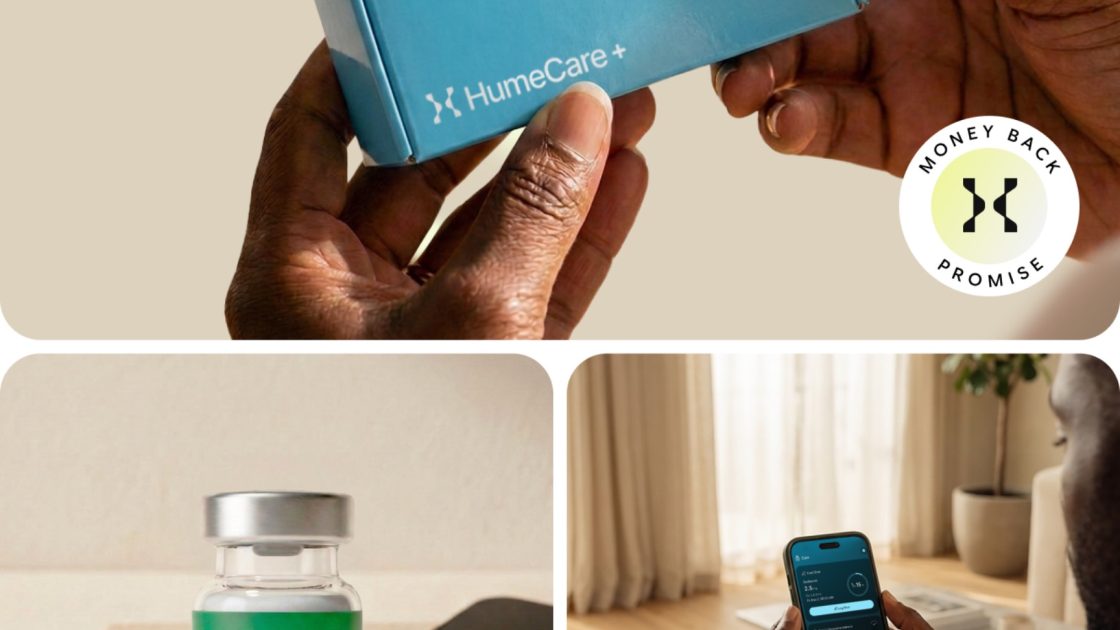
HumeCare+ wants $199 a month — $299 list — for its GLP-1 protocol. Trimi sells compounded semaglutide for $99. Telos gets you started for $49. Same drug class, a gap of $100 to $250 every month. The only question that matters: what exactly does the premium buy, and who actually needs it?
The numbers, side by side
| HumeCare+ | Budget tier (Trimi, Telos, bmiMD, Lttl) | |
|---|---|---|
| Advertised monthly price | $199 (3-mo plan, $100 credit; $299 list) | $49–$129 |
| Hardware included | Hume Pod body-composition scale ($352 value) | None |
| App & tracking | Dose timing, food log, weekly scans | Minimal or none |
| Clinician access | Unlimited, included | Leaner; often async check-ins |
| Money-back guarantee | 90 days | Rare |
| Added nutrients | Glycine, B12, B6 built in | No |
| Estimated 12-month cost* | ~$2,388–$3,588 | ~$1,138–$1,548 |
*Low end assumes the $199 rate holds all year; high end is the $299 list price. Budget figures come from our reviews of Trimi, Telos Rx, bmiMD and Lttl; the full market lives in our 12-month cost comparison.
Where HumeCare’s premium is real
Body-composition tracking. This is the genuinely differentiated piece. Lean-mass loss is the documented blind spot of rapid GLP-1 weight loss, and HumeCare is the only program in our coverage that puts a fat-vs-muscle scale in the box and builds the protocol around protecting muscle. Budget programs track nothing.
Structure for people who drift. Dose reminders, food logging, weekly scans, unlimited clinician messaging — adherence scaffolding, and adherence is what actually separates people who finish from people who quit in month two. If you’ve already failed a bare-bones program, buying structure isn’t vanity.
The guarantee. A 90-day money-back promise (with conditions — read them) simply doesn’t exist at the $99 tier.
Where the budget tier wins
Raw math. A year on Trimi runs about $1,188. A year on HumeCare runs $2,388 at best, $3,588 at list. The $1,200–$2,400 difference buys a lot of gym membership and groceries — and the active compound in the vial is the same category of state-licensed compounded medication either way.
Simplicity. Flat month-to-month prices, no welcome-credit asterisks, no bundle math. With Lttl at $129 flat or Trimi at $99 flat, the number on the pricing page is the number on your card.
Three people, three right answers
The restarter. Tried a cheap program, lost 10 pounds, drifted, regained. The structure — scans, reminders, a clinician who answers — is precisely what was missing. HumeCare is built for this person.
The optimizer. Comfortable self-injecting, tracks macros already, owns a smart scale. The Pod duplicates what they have; the premium buys nothing they’ll use. Budget tier, no contest.
The muscle-conscious loser. Lifts weights, worried about losing strength along with fat. HumeCare’s composition tracking plus glycine framing speaks directly to this — or a budget program plus their own protein discipline gets 80% of the way for half the price.
How we compared
Figures come from each brand’s public pricing pages at the time of our reviews, linked throughout. One constant across every program, premium or budget: compounded GLP-1 medications are not FDA-approved products, the published trial evidence (about 15% average loss for semaglutide in NEJM’s STEP program, about 20% for tirzepatide in SURMOUNT-1) comes from approved versions, and the prescribing clinician — not a comparison table — should confirm what fits your health history.
Where both tiers are exactly the same
Worth saying plainly, because the marketing on both ends obscures it: premium and budget programs alike prescribe compounded medications prepared by state-licensed compounding pharmacies. Neither tier’s product is FDA-approved; both carry the same category of disclosures; both run on an online assessment reviewed by a licensed clinician. The $100–$250 monthly gap is entirely in the wrapper — hardware, software, support, guarantee — never in the regulatory status of what’s in the vial.
The checkout checklist (use it on either tier)
- What does month four cost? HumeCare’s $199 carries a welcome credit; several budget programs carry intro rates. Get the renewal number in writing before paying.
- What happens to the price when your dose goes up? Flat-price programs (Trimi, Lttl, HumeCare’s advertised model) hold; others climb $50–$150 as you titrate.
- What are the guarantee’s conditions? A results guarantee with adherence requirements is insurance, not a trial. Read the terms page, not the banner.
- How do you cancel? Message, portal button, or phone call? The answer tells you a lot about a company.
The 12-month picture, concretely
Run one realistic scenario: you stay on treatment for a year, titrating normally. On Trimi you pay about $1,188 and buy your own $40 smart scale, bringing structure-included spend to roughly $1,230. On HumeCare at the advertised rate you pay about $2,388 — and if the welcome-credit rate doesn’t survive renewal, the list-price year is $3,588. The premium over budget is therefore $1,150 to $2,350 for the year. Against that, weigh what quitting costs: if structure keeps you on protocol even two extra months, the math can genuinely close, because the most expensive GLP-1 program is the one you abandon in week six with nothing to show for it. That’s the honest frame — not which program is cheaper, but which one you’ll still be using in month eight.
Is HumeCare+ worth $100+ more per month than Trimi?
Only if you’ll use the structure: the scans, the app, the clinician access, the guarantee. If those go unused, you’re paying bundle prices for a molecule the budget tier sells bare.
Can I buy the Hume Pod separately?
It’s positioned as part of the program bundle at a listed $352 value. If composition tracking is all you want, consumer smart scales exist — the integration with dosing and coaching is what HumeCare is actually selling.
Does the 90-day guarantee make it risk-free?
No guarantee is. Expect adherence conditions in the terms. It does shift meaningful risk back to the company, which the budget tier never offers.
Related reading
Affiliate & medical disclosure: This review is independent and for information only, not medical advice. Some links may be affiliate links; we may earn a commission at no cost to you, which never affects our score. Consult a licensed provider before starting any product.