Is WellMedr the Lowest-Risk Way to Try GLP-1s? The 90-Day Guarantee, Analyzed
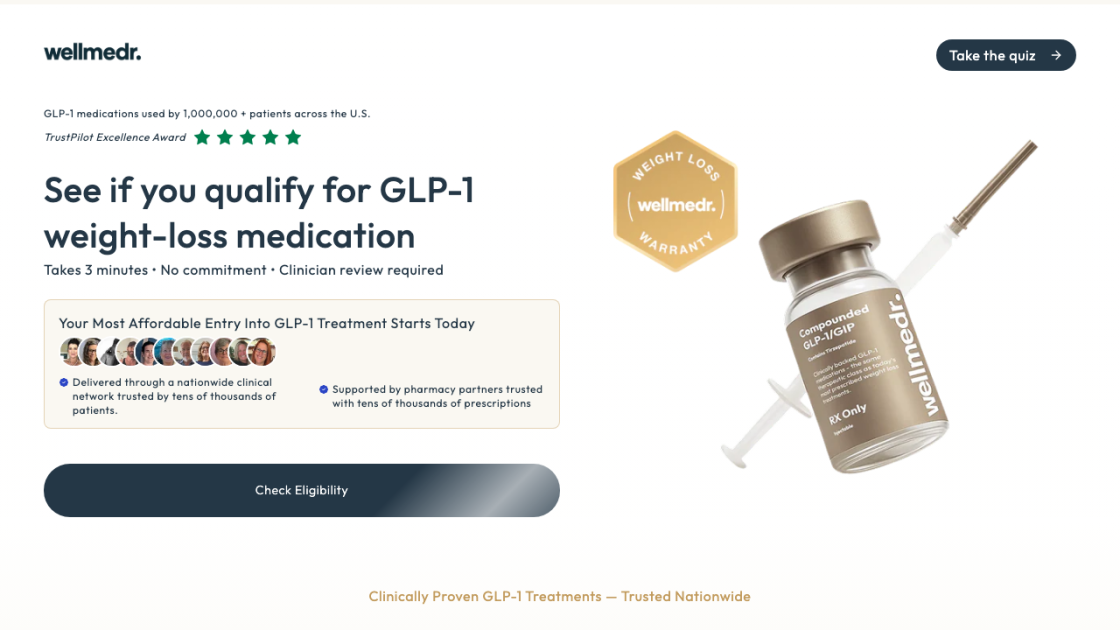
The biggest fear stopping would-be GLP-1 patients isn’t needles — it’s spending serious money on a therapy that might not work for their body. Non-response is real: clinical trials consistently show a wide spread of outcomes, with a meaningful minority losing little. Most telehealth programs price that risk into your pocket. WellMedr’s answer is structural: a 90-day money-back guarantee if you don’t lose weight, wrapped around some of the lowest entry pricing in the category.
This analysis asks one question: does WellMedr actually minimize your downside — and what fine print should you nail down first?
The risk math of trying a GLP-1
Consider the standard worst case at a no-guarantee service: three months of payments, side effects you push through, minimal weight change, and nothing back. At typical compounded pricing that’s $300-700 spent learning your physiology doesn’t cooperate. WellMedr’s construction changes the equation: entry pricing from $88/month for compounded semaglutide (from $158 for tirzepatide), a defined 90-day window, and a documented refund path if the scale doesn’t move. Your worst case becomes a refunded experiment.
Why 90 days is the clinically honest window
Published GLP-1 trials show meaningful average weight change within the first 12 weeks of consistent, properly-titrated dosing — it’s the window where responders declare themselves. A 30-day guarantee would be theater (you’re barely past starting doses); an open-ended one would be uninsurable. Ninety days is the length an actuary and an endocrinologist could both sign off on, which is quiet evidence the offer was designed seriously.
What to verify before you rely on it
- Adherence conditions: guarantees typically require staying on protocol and completing check-ins — get the exact list
- Documentation: how is ‘no weight loss’ measured and by whom?
- Scope: does the refund cover medication, membership, or both?
- Claim process: deadline and method for invoking it
Five minutes with support — in writing — converts the guarantee from marketing comfort into an actual contract. Do it before your card is charged, and keep the reply.
The program you’re actually testing
The guarantee would mean little around a weak program. WellMedr’s core is solid: a 15-minute intake, personalized plans from board-certified US clinicians, discreet delivery with automatic refills, unlimited clinician messaging, and an AI-enhanced platform handling tracking and logistics (workflow convenience, not medical decision-making — the humans handle that). Brand-name options exist on the same menu (Ozempic from $1,399, Zepbound from $1,599) for the FDA-approved-only crowd, and a ‘$150 off for life’ standing discount sweetens ongoing pricing.
The honest caveats
‘From’ pricing reflects entry doses and promotions — confirm your cost trajectory at realistic maintenance doses before anchoring on $88. Celebrity and athlete endorsements on the site are marketing, not evidence; the relevant evidence is the trial literature, which supports 25-40 lb losses as plausible-but-not-promised outcomes over sustained treatment (semaglutide trial patients commonly average ~15% body weight over a year). And compounded medications, as ever, aren’t FDA-approved finished products — a category fact WellMedr acknowledges.
Who the low-risk framing suits best
- First-timers hesitant to gamble on their responder status
- Budget-sensitive patients who need the floor pricing AND the safety net
- Previous non-responders wanting a cheap, protected second attempt (flag your history in the intake — clinician dosing strategy may differ)
Safety corner
The guarantee de-risks your wallet, not your body: standard GLP-1 screening still applies (medullary thyroid carcinoma history, MEN 2, pancreatitis, pregnancy), early nausea remains common and usually transient, and protein plus resistance training still protect lean mass. Use the unlimited messaging as designed. This analysis is information, not medical advice.
Bottom line
Structurally, yes — WellMedr is about the lowest-risk mainstream entry into GLP-1 therapy we’ve analyzed: floor-level pricing, a clinically honest guarantee window, and continuous clinician access. Convert the guarantee’s terms into writing before enrolling, and the worst realistic outcome shrinks from ‘expensive disappointment’ to ‘refunded experiment.’ Few programs can say that.
Running your own 90-day protocol
If you enroll, make the guarantee window a real experiment. Week zero: record weight, waist, photos, and your written copy of the guarantee terms. Weeks one through twelve: follow titration exactly, log weekly weigh-ins under consistent conditions, and use the unlimited clinician messaging for every side-effect and dosing question — both for your results and because documented engagement is what adherence clauses look for. Week twelve: assess against your baseline. Responders will usually know by then; non-responders will have a clean, documented case.
The psychology of a safety net
There’s a subtle behavioral benefit to the guarantee beyond the refund math: people who know their downside is capped start therapy with less anxiety, adhere more consistently, and quit less at the first rough week — which itself improves outcomes. The guarantee’s greatest value may be that most people who have it never need it. That’s not marketing spin; it’s how commitment devices work, and WellMedr has effectively built one into its pricing.
Frequently asked questions
What does WellMedr’s guarantee actually promise?
Your money back if you don’t lose weight within 90 days — subject to program conditions you should obtain in writing before enrolling.
How cheap is WellMedr really?
Compounded semaglutide starts from $88/month and tirzepatide from $158, with a standing $150-off-for-life discount; confirm your dose-based price trajectory during intake.
What if I want brand-name medication instead?
WellMedr lists Ozempic from $1,399 and Zepbound from $1,599 monthly — FDA-approved options on the same menu at the category’s usual brand premium.
Is the AI platform making medical decisions?
No — board-certified US clinicians handle plans and judgment calls; the AI layer manages tracking, refills and workflow.
Related reading
Affiliate & medical disclosure: This review is independent and for information only, not medical advice. Some links may be affiliate links; we may earn a commission at no cost to you, which never affects our score. Consult a licensed provider before starting any product.