Retinal vs Retinol: The Stronger Sibling, Explained
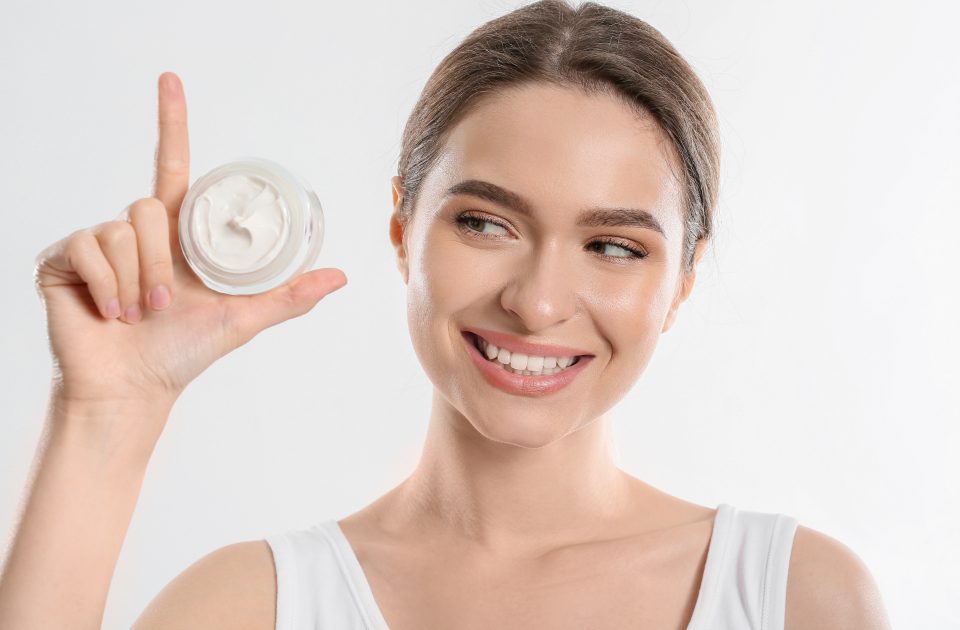
One letter. That’s the entire visible difference between retinol and retinal on an ingredient label, and skincare brands are counting on you not asking what the missing “o” is worth. Quite a lot, as it happens — the two are separate rungs on the vitamin A ladder, and the one you’ve barely heard of sits meaningfully closer to the top.
Retinal — full name retinaldehyde — has spent years as the overlooked middle child of the retinoid family. That’s changing fast, and for once the trend has actual biochemistry behind it.
The ladder every retinoid climbs
Here’s the piece that makes the whole category click. No retinoid you rub on your face does anything in its bottled form. Skin cells only respond to one molecule: retinoic acid. Everything else must be converted, step by step, by enzymes in your skin:
- Retinol → retinaldehyde → retinoic acid. Two conversions.
- Retinal (retinaldehyde) → retinoic acid. One conversion.
- Tretinoin (prescription) — is retinoic acid. Zero conversions.
Each conversion step loses potency and adds delay. That’s why prescription tretinoin is the gold standard with five decades of evidence — and also why it’s famous for irritation. Retinal sits one rung below: closer to the active form than retinol, gentler than the prescription. The elevator pitch writes itself, but the pitch happens to be chemically accurate.
What the research actually shows
The headline study is older than the hype: a randomized 44-week trial in patients with photoaged skin compared 0.05 percent retinaldehyde against 0.05 percent tretinoin and found comparable improvements in wrinkles and roughness — with the retinal group experiencing substantially less irritation. A prescription-level result from an over-the-counter molecule, published in a peer-reviewed dermatology journal in the late 1990s, and then largely ignored for twenty years because retinal was expensive to stabilize.
Speed is the other differentiator. Lab and clinical work suggests retinal converts to retinoic acid up to eleven times faster than retinol, and users typically report visible changes on a quicker timeline — think 4 to 8 weeks versus retinol’s usual 8 to 12. Research consistently shows all topical retinoids eventually arrive at similar destinations — increased collagen production, faster cell turnover, smoother texture, faded dark spots; the American Academy of Dermatology backs retinoids as the best-evidenced anti-aging ingredient category there is. Retinal just takes a shorter route.
Bonus round: retinaldehyde has documented antibacterial activity against the bacteria involved in acne — a property retinol doesn’t share. For breakout-prone users, that’s a modest two-for-one the marketing rarely even mentions, presumably because “kills bacteria” sells worse than “youth.”
The catches, because there are catches
First, money. Retinal is notoriously unstable and expensive to formulate — the reason it stayed obscure — and stabilized versions carry the invoice: expect noticeably higher prices than comparable retinol products.
Second, “gentler than tretinoin” does not mean gentle. Retinal is still a serious active; beginners jumping straight to 0.1 percent nightly will earn the same flaking, redness, and regret as any retinoid rookie. Dryness, purging in breakout-prone skin, and sun sensitivity all still apply, and so does the standard pregnancy rule — topical retinoids of every strength are on the skip list during pregnancy and breastfeeding, a conversation for your doctor.
Third, honest uncertainty: head-to-head trials of retinal versus retinol are surprisingly thin. The conversion-speed logic is sound, the tretinoin-comparison trial is encouraging, and user experience lines up — but “clearly better in large modern trials” is a sentence nobody can write yet. If you have a retinol routine that’s working, the upgrade case is real but not urgent.
Choosing and using either one
- Total beginner: starting with retinol at 0.25–0.3 percent, or retinal at the low 0.03–0.05 percent end, twice weekly, is the low-drama path. Build to nightly over six to eight weeks.
- Retinol veteran wanting more: retinal at 0.05–0.1 percent is the logical next rung before asking a dermatologist about tretinoin.
- Sensitive skin: retinal’s gentler-than-tretinoin profile still may be too much; buffering over moisturizer and going slow matters more than the molecule.
- Acne-prone: retinal’s antibacterial side makes it an interesting pick — though prescription adapalene has the deepest acne evidence at drugstore prices.
- Non-negotiables for both: nighttime application (retinoids degrade in light), pea-sized amount, moisturizer as a moat, and daily sunscreen — without which the entire project is self-sabotage.
Check the label for packaging too: airless pumps and opaque tubes protect these unstable molecules; a clear jar of retinal is a candle burning at both ends.
Routine placement is simple: cleanse, let skin dry a few minutes (damp skin absorbs faster and stings more), apply the retinoid, wait briefly, then moisturize — or sandwich it between two moisturizer layers if you’re reactive. Niacinamide pairs well and cushions irritation. Exfoliating acids belong on alternate nights, not stacked on top; combining a fresh retinal habit with a glycolic toner is the classic self-inflicted barrier disaster of every skincare forum. And give any retinoid twelve honest weeks before judging it — collagen remodeling is measured in months, not mornings, which is exactly why before photos in consistent lighting beat memory every time.
Is retinal just marketing for “stronger retinol”?
No — it’s a genuinely different molecule at a different step of the same pathway. The marketing exaggeration, where it exists, is in implying settled superiority; the biochemistry and the tretinoin-comparison data are real.
Can I switch from retinol to retinal directly?
Mostly yes, with a step down in frequency for the first two weeks while your skin recalibrates. Matching “strength” across molecules is inexact — 0.05 percent retinal behaves more like a high-strength retinol than like its number suggests.
Why is my retinal product orange?
That’s the molecule itself — retinaldehyde is naturally yellow-orange, and honest formulations wear the color. It’s the same pigment family doing photoreception in your eyes; the stuff literally helps you see, which remains the best cocktail-party fact in skincare.
When should I skip both and get tretinoin?
Stubborn acne, significant photoaging, or simply wanting the maximum-evidence option are all fair reasons to see a dermatologist — generic tretinoin is often cheaper than premium retinal. The over-the-counter ladder exists for convenience and tolerance, not because the top rung is locked.
Related reading
Affiliate & medical disclosure: This review is independent and for information only, not medical advice. Some links may be affiliate links; we may earn a commission at no cost to you, which never affects our score. Consult a licensed provider before starting any product.