FullWell vs Standard Drugstore Prenatals: Is the Upgrade Worth $42?
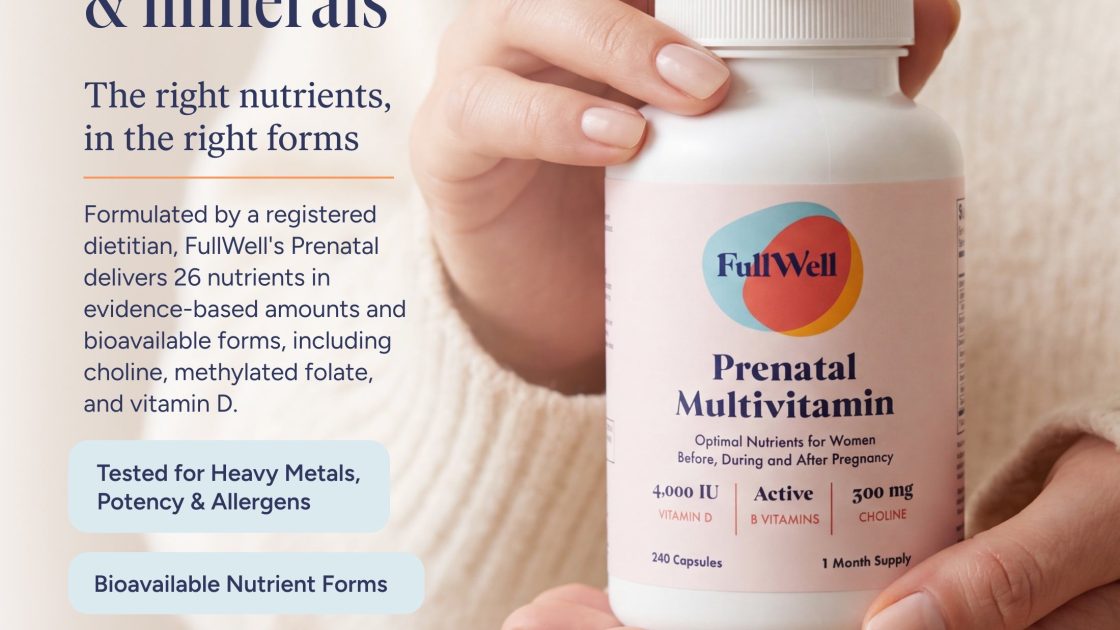
Stand in the prenatal aisle at any pharmacy and the choice looks simple: a $15 bottle of One A Day or Nature Made, one softgel a day, done. Then a friend who’s been through IVF tells you she paid $42 a month for something called FullWell and swallowed eight capsules a day to do it. The obvious question — is the FullWell prenatal upgrade actually worth $42 when the drugstore shelf is right there for a third of the price? — doesn’t get answered by the marketing on either box. It gets answered by reading the two supplement-facts panels side by side. So that’s what this does.
I’m going to skip the brand story and go straight to the label, because in prenatals the label is the product. Three nutrients decide most of this comparison: choline, the form of folate, and what the pill leaves out on purpose.
FullWell vs Standard Drugstore Prenatals, Nutrient by Nutrient
Choline is where the gap opens widest. The NIH Office of Dietary Supplements sets the adequate intake for pregnant women at roughly 450 mg a day, and survey data suggests the overwhelming majority of pregnant women fall short of it. FullWell puts 300 mg of choline in its daily serving. The standard One A Day Women’s Prenatal? Zero — you have to jump to their “Advanced” line to get any. Nature Made’s prenatal-plus-choline bundle does better than most drugstore options at 265 mg, but you’re taking a second capsule to get there. Choline is bulky and expensive to formulate, which is exactly why the cheap bottles skip it.
Folate form is the second fault line, and it’s subtler. Both One A Day and Nature Made deliver 800 mcg of folic acid — the synthetic form. FullWell uses 1,360 mcg DFE of L-5-methyltetrahydrofolate, the already-methylated form. This matters because a large slice of people carry MTHFR gene variants that make converting synthetic folic acid to the usable form less efficient. ACOG’s guidance calls for 400–800 mcg of folate starting before conception either way, so the drugstore option isn’t “wrong.” But if you know you have an MTHFR variant, the methylated form skips a step your body might be bad at.
Then there’s what FullWell deliberately leaves out, and this is where the drugstore pills arguably win on convenience. FullWell contains no iron and no DHA. Both are formulation choices, not oversights — iron competes with other minerals for absorption, so FullWell sells it separately, and DHA degrades over time, so they bottle fish oil apart. The drugstore softgels bundle 200 mg of DHA and a full iron dose right in. That’s genuinely more convenient. It’s also why FullWell is eight capsules instead of one.
| Nutrient | FullWell Prenatal | One A Day Prenatal 1 | Nature Made + Choline |
|---|---|---|---|
| Choline | 300 mg | 0 mg (standard) | 265 mg |
| Folate form | Methylfolate (1,360 mcg DFE) | Folic acid (800 mcg) | Folic acid (800 mcg) |
| Vitamin D | 4,000 IU | ~600 IU | ~1,000 IU |
| DHA | None (sold separately) | 200 mg | 200 mg |
| Iron | None (sold separately) | Included | Included |
| Pills/day | 8 capsules | 1 softgel | 2 (multi + choline) |
| Price/month | ~$42–45 | ~$12–18 | ~$20–25 |
The Testing Difference the Panel Doesn’t Show
One thing you can’t read off either box: what actually made it into the capsule versus what’s printed on the label. FullWell third-party tests every single lot for contaminants including heavy metals, and publishes the results. That’s not nothing in a category where prenatal-vitamin heavy-metals headlines resurface every couple of years. Drugstore brands do run internal quality control, and they’re regulated — but batch-level published testing you can actually pull up is rare at the $15 price point. No prenatal, cheap or premium, is FDA-approved before sale; the FDA doesn’t approve supplements. So third-party testing is the closest thing to independent verification you get, and it’s part of what the extra dollars buy.
Doing the $42 Math Honestly
Here’s the fair way to think about the money. If you were going to take a drugstore prenatal and nothing else, FullWell costs roughly $30 more a month, and a chunk of that pays for choline and a folate form you may or may not need. But if you were planning to add a standalone choline supplement — which runs $15–20 on its own — plus wanted the methylated folate, you’re assembling most of FullWell’s formula out of two or three separate bottles and landing near the same monthly total, minus the published testing. For the label-reader who was building that stack anyway, the upgrade is close to break-even. For the person who just wants the ACOG folate baseline covered, it isn’t, and the drugstore bottle is a perfectly defensible choice.
The Honest Downsides
Eight capsules a day is a real ask, especially in a first trimester when swallowing anything can be a gamble — the drugstore one-softgel routine is easier to actually stick to. And because FullWell strips out iron and DHA, “the upgrade” isn’t really $42; it’s $42 plus a separate fish oil (about $30) if you want the DHA the drugstore softgel included for free. Budget for the system, not just the bottle. That’s the catch nobody puts on the label.
Is methylfolate actually better than folic acid for everyone?
Not necessarily. For people who convert folic acid efficiently, both hit the ACOG target fine. Methylfolate’s clearest advantage is for those with MTHFR variants who process synthetic folic acid less efficiently. If you don’t know your status, either form covers the neural-tube baseline — the methylated form is just insurance.
Why would a premium prenatal leave out iron and DHA?
On purpose. Iron competes with zinc, calcium and magnesium for absorption, so dosing it separately lets you match it to your bloodwork instead of guessing. DHA loses potency sitting in a capsule, so it’s fresher bottled on its own. The tradeoff is you buy and swallow more products.
Can I just buy a drugstore prenatal plus a choline pill?
You can, and you’ll get close for slightly less money. What you’ll miss is the methylated folate (if you want it) and the published batch testing. It’s two or three bottles instead of one, but it’s a legitimate budget route — bring the labels to your OB and confirm the doses.
Do eight capsules a day mean a higher risk of overdoing it?
No — the eight capsules make up one serving dosed to prenatal targets, not eight full doses. The pill count reflects how much bulky nutrient (choline especially) they fit without mega-dosing. Always confirm the total against your prenatal care plan, particularly if you take other supplements.
Verdict
Is the FullWell upgrade worth $42 over a drugstore prenatal? If you read supplement labels and you specifically want a meaningful choline dose, methylated folate, and testing you can look up, yes — the extra money buys three things the $15 bottle genuinely doesn’t have, and if you were going to stack those separately anyway it’s roughly a wash. If you want a convenient one-softgel routine with DHA and iron built in, and the ACOG folate baseline is your bar, the drugstore prenatal still does the core job for a third of the price. The upgrade is real, but it’s for a specific buyer — the one who’d rather audit a label than trust a lower number. Whichever you pick, take it to your first prenatal appointment and let your OB sign off on the plan.
Related reading
Affiliate & medical disclosure: This review is independent and for information only, not medical advice. Some links may be affiliate links; we may earn a commission at no cost to you, which never affects our score. Consult a licensed provider before starting any product.