Front Squat vs Back Squat: Key Differences and Which One You Need
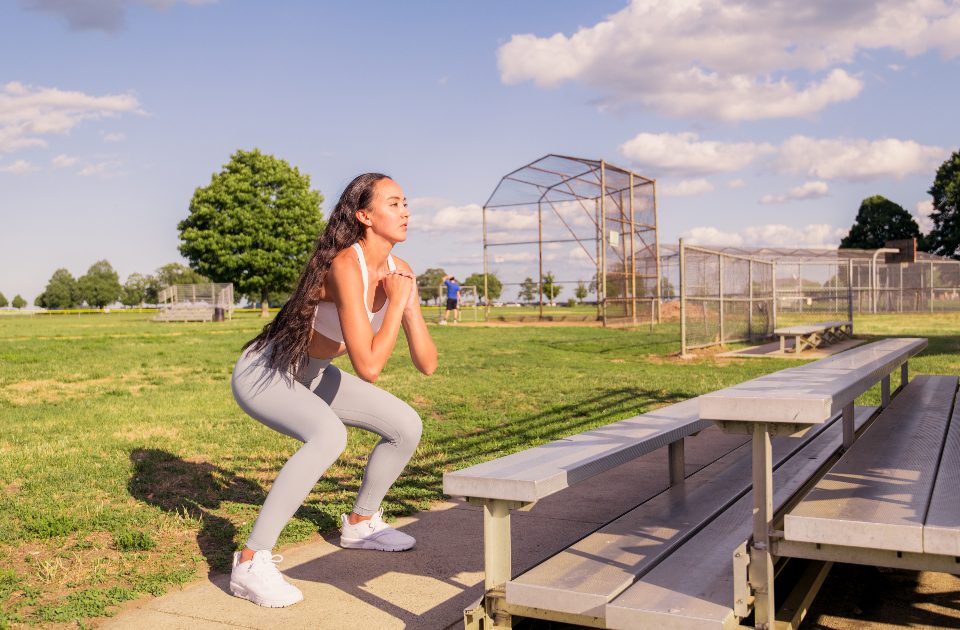
Walk into most gyms and the barbell back squat gets treated as the default, while the front squat sits in the corner as an “advanced” or optional variation. That hierarchy isn’t quite fair — both are excellent, well-established strength exercises, and a common mistake is assuming one is simply a harder version of the other rather than a genuinely different movement with different demands.
Choosing between them, or deciding how to use both, comes down to your goals, mobility, and any joint considerations you’re working around. Understanding the mechanical differences makes that decision far easier than just picking whichever one looks more advanced.
Bar Position Changes Everything
In a back squat, the bar rests across the upper trapezius (high-bar) or rear deltoids (low-bar), positioned behind the body’s center of gravity. In a front squat, the bar rests across the front deltoids and collarbones, held in place by the fingertips or a crossed-arm grip, positioned in front of the torso.
This single difference in bar placement changes the entire mechanics of the lift. Because the front-loaded bar sits closer to the body’s center of gravity, the front squat generally allows — and requires — a more upright torso throughout the movement. The back squat, particularly the low-bar version, involves more forward torso lean to keep the bar balanced over the mid-foot.
Muscle Emphasis: Quads vs Posterior Chain
Research on squat biomechanics consistently shows that the front squat places greater demand on the quadriceps due to the more upright torso and correspondingly greater knee flexion relative to hip flexion. The back squat, especially in its low-bar form, shifts more emphasis toward the glutes, hamstrings, and lower back due to the greater forward lean and hip involvement.
- Front squat: greater quadriceps emphasis, more upright torso, shorter effective range for the lower back
- High-bar back squat: fairly balanced between quads and posterior chain, moderate torso lean
- Low-bar back squat: greatest posterior chain (glute/hamstring) emphasis, most forward torso lean
Neither pattern is “better” in an absolute sense — the right emphasis depends on whether you’re training for general strength, a specific sport, or working around an existing injury.
Load Capacity and Practical Considerations
Most lifters can handle meaningfully more weight in a back squat than a front squat, often 15-20% more, simply because the more posterior bar position and greater hip involvement create better leverage for moving heavy loads. This is one reason back squats dominate powerlifting and general strength programs focused on maximal loading.
The front squat’s front-rack position also makes it a natural training partner for movements that start from that same position, such as the clean, which is one reason Olympic weightlifters prioritize front squats heavily in their programming.
Joint and Mobility Considerations
The front squat’s upright torso can be gentler on the lower back for people with a history of lumbar strain, since it reduces the shear forces associated with a heavily forward-leaning torso. However, it demands significant wrist, shoulder, and thoracic spine mobility to maintain the front-rack position comfortably, which can be a limiting factor for lifters with tight shoulders.
The back squat demands less upper-body mobility but requires adequate ankle dorsiflexion and hip mobility to reach depth with good form, particularly in the low-bar variation, where the more pronounced hip hinge pattern requires flexible hip flexors and hamstrings.
- Tight shoulders/wrists: back squat may be more accessible initially
- Lower back sensitivity: front squat’s upright torso may reduce lumbar strain
- Limited ankle mobility: both require some dorsiflexion, but elevating the heels (via weightlifting shoes or plates) can help either variation
How to Incorporate Both: A Practical Training Plan
Rather than choosing exclusively between them, many well-designed programs use both squats for complementary benefits across a training week or training block.
- If your primary goal is maximal strength, prioritize the back squat as your main lift, performed 1-2 times weekly with progressive overload.
- Add front squats as a secondary movement once or twice weekly at a lighter relative load, both to build quad strength and to practice the front-rack position if it’s relevant to your goals.
- If you’re new to both, spend several weeks learning each with an empty bar or light dumbbells before adding significant load, focusing on depth, torso position, and knee tracking over the toes.
- Address any mobility restrictions directly — targeted wrist and thoracic mobility work for the front squat, and ankle/hip mobility drills for the back squat — rather than compensating with poor form under load.
- Track progress separately for each lift rather than expecting identical loads, since the exercises simply aren’t directly comparable in the weight you’ll be able to move.
Consistency and gradually increasing training stimulus over time — sometimes called progressive overload — remains more important for long-term strength gains than which specific squat variation you favor.
Safety Notes and Individual Variation
Both squat variations are safe and effective for most healthy adults when performed with appropriate technique and gradual loading progressions. Beginners often benefit from learning under the guidance of a qualified coach or trainer, particularly to correct common errors like knee valgus (knees caving inward), heel lift, or excessive forward lean.
Anyone with an existing knee, hip, shoulder, or back condition should consult a physical therapist or physician before adding heavy squatting of either type to a program, since individual anatomy and injury history significantly affect which variation, load, and depth are appropriate.
Which squat is better for building bigger quads?
The front squat generally provides a stronger quadriceps stimulus due to its more upright torso and greater knee flexion, though the back squat still trains the quads substantially, particularly the high-bar version.
Is the front squat harder than the back squat?
It’s differently demanding rather than simply “harder.” Front squats require more upper-body mobility and core stability to maintain the front-rack position, while typically allowing less overall weight than a back squat at a comparable relative effort.
Can beginners start with front squats?
Yes, though the front-rack position can be uncomfortable at first. Some coaches actually prefer starting beginners on front squats because the upright torso requirement naturally discourages excessive forward lean and reinforces good depth and knee tracking.
Do I need special shoes for squatting?
A flat, stable, non-compressible sole helps with both variations. Weightlifting shoes with an elevated heel can assist lifters with limited ankle mobility in reaching proper depth with a more upright torso, though they aren’t strictly necessary for everyone.
Related reading
Affiliate & medical disclosure: This review is independent and for information only, not medical advice. Some links may be affiliate links; we may earn a commission at no cost to you, which never affects our score. Consult a licensed provider before starting any product.