Beam Dream vs Plain Melatonin: Is the Upgrade Worth It in 2026?
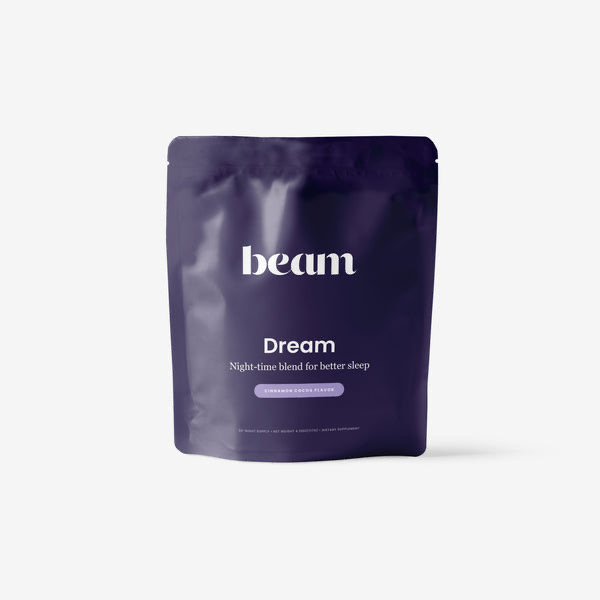
There’s a jar of 5 mg melatonin gummies in my bathroom that cost about six bucks and lasts two months. Next to it, a friend keeps a $64.99 pouch of Beam Dream. Same goal — fall asleep, stay asleep, wake up human. Wildly different price tags. So the Beam Dream vs plain melatonin question is really a value question: what does the extra money actually buy, and is it buying anything you’d notice?
I’ve used both. The short version is that they’re not the same product wearing different clothes. Melatonin does one job. Dream is trying to do four or five at once. Whether that’s worth roughly 20 times the cost per serving depends on why your sleep is bad in the first place.
What plain melatonin actually does
Melatonin is a hormone your body already makes when it gets dark. Taking it as a supplement mostly tells your brain “it’s night, wind down.” The National Institutes of Health notes it’s genuinely useful for shifting your internal clock — jet lag, a wrecked schedule, that kind of thing — but the evidence for it keeping you asleep all night is thinner than the marketing implies. And here’s the part people miss: most drugstore gummies pack 5 to 10 mg, which is far more than your body would ever release on its own. That overshoot is why a lot of people wake up foggy. More is not better with this stuff.
The upside is obvious. It’s cheap — often five to ten cents a dose — it’s everywhere, and for a simple “I can’t fall asleep tonight” problem, it frequently works fine.
What Beam Dream adds to the mix
Dream isn’t a melatonin product with a fancy label. It’s a blend built around magnesium, L-theanine, apigenin, and reishi mushroom, with melatonin as an optional ingredient — Beam even sells a melatonin-free version of the same flavor. That design choice tells you where their head is. Magnesium and L-theanine target the “my brain won’t shut off” side of sleeplessness rather than just knocking you out. Apigenin (the compound that makes chamomile calming) and reishi round it out. If your issue is a racing mind at 11 p.m., that combination addresses something a lone melatonin dose doesn’t touch.
It’s also, frankly, a nicer experience. You stir it into warm water or milk and it tastes like cocoa or salted caramel. Beam leans on 20,000-plus five-star reviews, and the ritual of a warm mug at night is doing real psychological work there, separate from the chemistry. Like any supplement, none of it is evaluated by the FDA the way a drug would be, so treat the claims as claims, not guarantees.
One more thing that doesn’t show up on a label: magnesium is a mineral a lot of people run low on, and it’s tied to muscle relaxation and calmer nerves. If you’re mildly deficient, topping it up at night can matter more than any melatonin dose. That’s not Beam-specific — you could buy magnesium glycinate on its own for pennies — but Dream folds it into one drink instead of a handful of separate pills, and for me that’s the difference between actually doing it every night and giving up by Thursday. Convenience is a real feature, even if it’s not a glamorous one.
Beam Dream vs plain melatonin: the cost breakdown
| Beam Dream | Plain melatonin | |
|---|---|---|
| What’s in it | Magnesium, L-theanine, apigenin, reishi, optional melatonin | Melatonin only (usually 5–10 mg) |
| Price | $64.99 (30 servings); $37.44 on subscription | ~$6–$12 per bottle |
| Cost per serving | ~$1.25 (subscribe) to $1.84 | ~$0.05–$0.10 |
| Targets | Racing mind, relaxation, staying asleep | Falling asleep, clock reset |
| Morning grogginess risk | Lower (small/optional melatonin) | Higher at 5–10 mg doses |
| Taste/ritual | Flavored nighttime drink | Pill or gummy |
That per-serving gap is the honest sticking point. At about $1.25 to $1.84 a night against a nickel, Dream has to earn the difference every single evening, and on the nights it just works quietly you’ll wonder if the cheap stuff would’ve done the same. Some nights it probably would. My own take: Dream is worth it when the problem is winding down, not when the problem is a one-off late bedtime.
Who should pick which
Reach for plain melatonin if you occasionally can’t fall asleep, you’re fighting jet lag, or you just want the cheapest thing that works. Consider Beam Dream if you fall asleep fine but wake up at 3 a.m., if melatonin leaves you groggy, or if you want to skip the hormone entirely and lean on magnesium and L-theanine instead. Buy the melatonin-free version and you’ve basically got a relaxation drink with none of the next-day hangover. That flexibility is Dream’s most underrated feature, and it’s the reason I stopped treating this as an either/or.
Frequently asked questions
Does Beam Dream actually contain melatonin?
Only if you want it to. The standard Dream includes a modest amount of melatonin, but Beam sells a melatonin-free version of the same blend. The rest of the formula — magnesium, L-theanine, apigenin, reishi — does the heavy lifting either way, which is a big part of what separates it from a straight melatonin gummy.
Will Beam Dream leave me groggy in the morning?
Less likely than a 5–10 mg melatonin gummy, because Dream keeps melatonin low and optional. Most of the grogginess people blame on sleep aids comes from too much melatonin. If mornings are your problem, the melatonin-free Dream is worth trying before you write off nighttime supplements entirely.
Is Beam Dream worth the price over melatonin?
If cheap melatonin already gets you a full night, probably not — save your money. If you fall asleep but can’t stay asleep, or a busy mind is the culprit, the extra ingredients target things melatonin doesn’t, and the roughly $1.25 subscription serving starts to make sense. Match the tool to the actual problem.
Can I take Beam Dream every night?
It’s designed for nightly use, and the melatonin-free version sidesteps concerns about relying on the hormone long-term. As with any supplement, check with your doctor if you’re pregnant, on medication, or managing a health condition, since these products aren’t FDA-evaluated for treating anything.
Related reading
Affiliate & medical disclosure: This review is independent and for information only, not medical advice. Some links may be affiliate links; we may earn a commission at no cost to you, which never affects our score. Consult a licensed provider before starting any product.