Sunscreen Reapplication: Why One Morning Layer Isn’t Enough
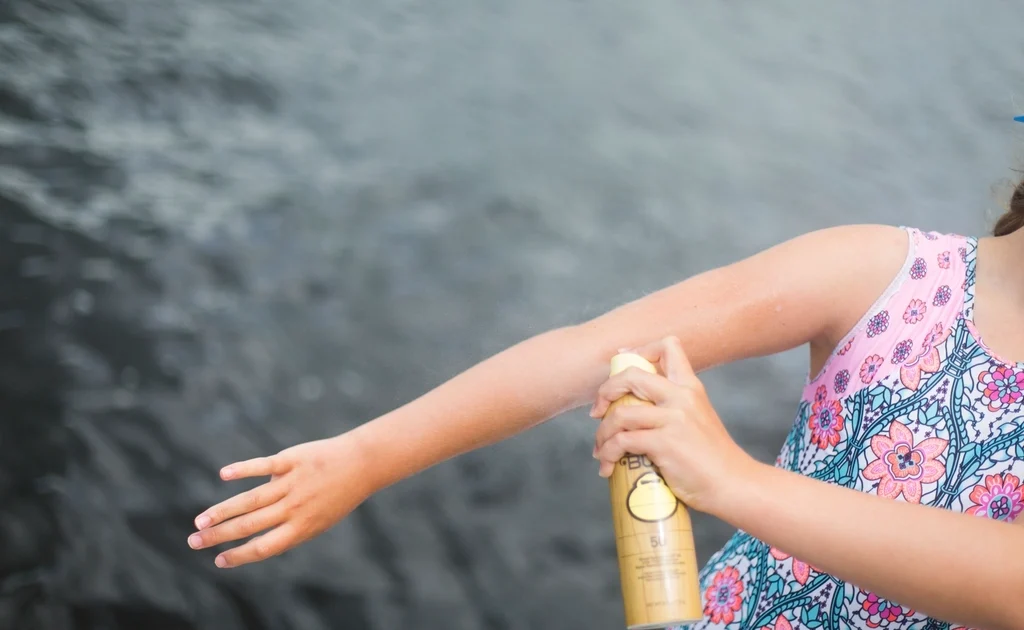
Applying sunscreen once in the morning and assuming you’re protected for the rest of the day is one of the most common sun-safety mistakes people make. Sunscreen isn’t a permanent shield; it breaks down, rubs off, and gets diluted by sweat and water over the course of a few hours, which means that single morning application is often doing far less by mid-afternoon than most people assume.
A common misconception is that a high SPF number means you can apply less often. In reality, SPF measures the level of protection at the moment of application, not how long that protection lasts, and reapplication timing depends more on activity and exposure than the SPF number on the bottle.
Why Sunscreen Breaks Down Over Time
Sunscreen filters, whether mineral or chemical, gradually degrade with continued UV exposure, and the protective film on your skin thins as it’s rubbed off by clothing, towels, and touching your face, or washed away by sweat and water. The FDA-recommended standard, echoed by dermatology organizations, is reapplication at least every two hours during sun exposure, and immediately after swimming, heavy sweating, or towel-drying.
- UV exposure itself gradually breaks down active sunscreen ingredients
- Sweat and water physically remove sunscreen from the skin
- Rubbing against clothing, towels, or skin-to-skin contact wears the layer thin
- Even “water-resistant” formulas lose effectiveness after swimming or heavy sweating, typically within 40-80 minutes depending on the product
How Much Sunscreen Most People Actually Need
Under-application is a major reason sunscreen underperforms even when it’s reapplied. Dermatology guidance commonly cites about one ounce (roughly a shot glass full) to cover the exposed skin of an average adult body, and about a nickel-sized amount for the face alone. Most people apply far less than this in practice, which effectively lowers the real-world SPF well below the number on the label.
Research consistently shows that under-application is common enough that dermatologists often recommend erring on the side of more product rather than less, since applying too little is a bigger real-world problem than applying too much.
A practical way to visualize the right amount is the “two-finger rule” some dermatologists teach: applying sunscreen in a line covering the length of your index and middle finger provides roughly the amount needed for the face and neck. For the body, filling a shot glass is a similarly useful visual benchmark, since most people significantly underestimate what a full ounce actually looks like spread across arms, legs, and torso.
When Reapplication Matters Most
Not every day requires the same vigilance. Reapplication matters most during prolonged or intense sun exposure — a beach day, outdoor sports, gardening, or any extended time outside during peak UV hours, generally late morning through mid-afternoon.
- Every 2 hours during continuous outdoor exposure
- Immediately after swimming or toweling off
- After heavy sweating during exercise
- More frequently on days with high UV index readings
Practical Ways to Make Reapplication Easier
The biggest barrier to reapplying sunscreen isn’t usually knowledge, it’s convenience, especially over makeup or when hands are messy or busy. Powder or spray sunscreen formulas designed for reapplication over makeup have become popular precisely because rubbing in a cream over a full face of makeup is impractical mid-day.
A Simple Reapplication Routine
- Set a phone reminder for every 2 hours during outdoor days, since it’s easy to lose track of time
- Keep a travel-sized sunscreen or setting-spray SPF product in your bag, car, or desk
- Reapply immediately after swimming, then again 2 hours later if still in the sun
- Use a full nickel-sized amount for the face and don’t forget commonly missed spots: ears, back of the neck, hairline, and tops of the feet
- Pair sunscreen with physical protection — a hat, sunglasses, and shade — especially during peak UV hours, rather than relying on sunscreen alone
Sunscreen as Part of a Broader Sun-Safety Approach
Skin cancer prevention guidance from major health organizations consistently frames sunscreen as one layer of protection, not a stand-alone solution. Seeking shade during peak sun hours, wearing UPF-rated clothing, and avoiding intentional tanning all reduce UV exposure in ways that don’t depend on remembering to reapply anything.
It’s also worth remembering that no sunscreen blocks 100% of UV radiation, even immediately after a fresh, generous application. Combining sunscreen with these other habits gives more reliable protection than sunscreen use alone, particularly for people with a personal or family history of skin cancer, who may want to discuss a more comprehensive sun-protection plan with a dermatologist.
Common Reapplication Mistakes to Avoid
One frequent mistake is applying sunscreen only once, in the morning, and assuming it lasts through a full day at the beach or pool. Another is reapplying over sweaty or wet skin without patting the area dry first, which can dilute the product and reduce even coverage. A third is forgetting commonly missed areas on reapplication, not just the initial application, since ears, the back of the neck, and hands are easy to skip when reapplying quickly.
Layering makeup or moisturizer with SPF on top of already-applied sunscreen doesn’t meaningfully extend protection time either; it’s the base sunscreen layer and its reapplication schedule that matters most, with any SPF-containing cosmetics serving as a minor supplement rather than a substitute.
Do I need to reapply sunscreen if I’m mostly indoors?
If you’re near windows for extended periods or step outside briefly throughout the day, some reapplication may still be worthwhile, though the urgency is much lower than for continuous outdoor exposure.
Does a higher SPF mean I can reapply less often?
No. SPF reflects the level of protection at the moment of application, not its duration. Reapplication timing depends on sweat, water exposure, and time elapsed, not the SPF number.
Is spray sunscreen as effective as cream for reapplication?
Spray sunscreen can be effective if applied generously and evenly, though it’s easy to under-apply with sprays. Rubbing it in after spraying helps ensure more even coverage.
Can makeup with SPF replace regular sunscreen?
Most people don’t apply enough SPF-containing makeup to reach the labeled protection level, so it’s better treated as a small supplement to, not a replacement for, a dedicated sunscreen product.
Affiliate & medical disclosure: This review is independent and for information only, not medical advice. Some links may be affiliate links; we may earn a commission at no cost to you, which never affects our score. Consult a licensed provider before starting any product.