FullWell Fertility Review 2026: What a $42 RD-Formulated Prenatal Actually Buys
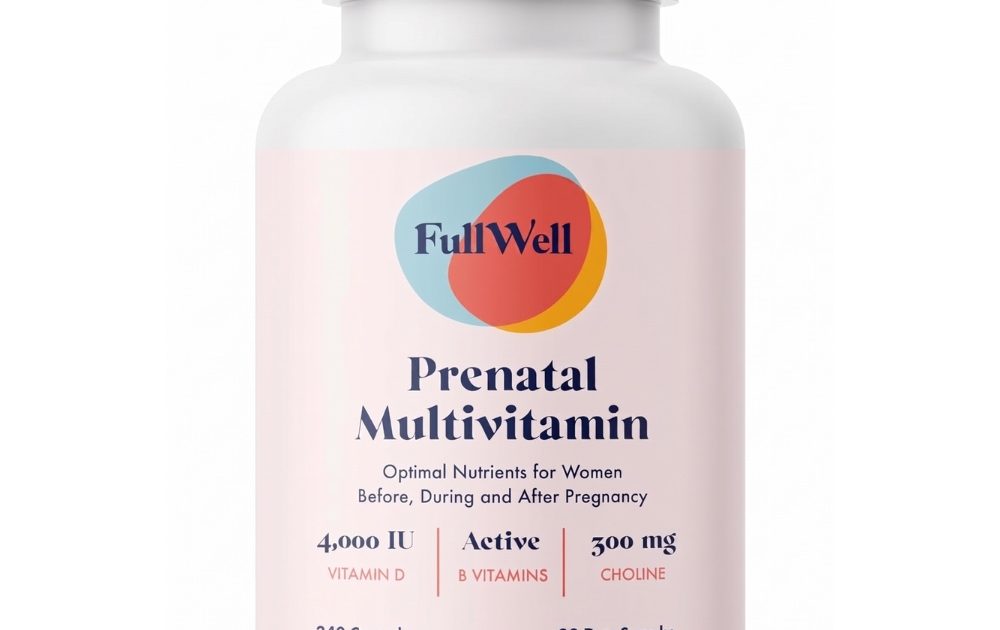
Most prenatal vitamins compete on price. FullWell Fertility competes on a spreadsheet: what nutrients are in the capsule, at what dose, in what form, and with what testing behind them. The flagship Women’s Prenatal Multivitamin starts at $42.45 a month — roughly two to three times what a drugstore prenatal costs — and the brand’s entire pitch is that the difference shows up line by line on the label. That is a claim we can actually check.
This review runs FullWell through the value math: what the $42.45 buys that a $15 prenatal doesn’t, where the neutral authorities (ACOG, the NIH Office of Dietary Supplements) land on the key nutrients, how the full product lineup prices out if you stack it, and which buyers genuinely come out ahead paying the premium — and which don’t.
The Brand in Brief: Who Formulates This and Why It Matters
FullWell was founder-formulated by Ayla Barmmer, MS, RD, LDN — a registered dietitian who spent years in fertility nutrition practice before building the product she couldn’t find on shelves — and the formulations are backed by a bench of MDs and OB-GYNs. That pedigree matters more in prenatals than in most supplement categories, because the gap between a good and a mediocre prenatal is not marketing; it is nutrient forms and doses.
Three concrete evidence points anchor the value case. First, choline: the NIH sets the adequate intake for pregnant women at roughly 450 mg per day, and consensus estimates suggest around 90–95% of pregnant women don’t reach it — yet meaningful choline doses are rare in prenatals because the raw material is bulky and expensive. FullWell includes it at a meaningful dose rather than a label-dressing sprinkle. Second, folate: ACOG and NIH guidance calls for 400–800 mcg of folic acid starting preconception, and FullWell delivers it as methylated folate — the form people with common MTHFR gene variants can use more readily than synthetic folic acid. Third, testing: every batch is third-party tested, including for heavy metals, and the results are downloadable. In a category where contamination headlines recur, batch-level published testing is a real differentiator, not a checkbox.
The rest of the formula follows the same philosophy: bioavailable B6 and B12, vitamin D, magnesium, and myoinositol — forms chosen for absorption rather than for keeping the cost of goods down.
The Cost Table: FullWell’s Lineup, Priced Out
Here is the current lineup and what each piece runs per month at listed prices. FullWell ships to 55 countries and takes 20% off your first order, which matters for the math below.
| Product | List price | With 20% first-order discount | Role |
|---|---|---|---|
| Women’s Prenatal Multivitamin | from $42.45/mo | ~$33.96 | Core prenatal |
| Women’s Multivitamin | $42.45/mo | ~$33.96 | Non-pregnancy daily |
| Prenatal Fish Oil | $29.95/mo | ~$23.96 | Omega-3/DHA add-on |
| Iron Bump | $19.95/mo | ~$15.96 | Separate iron dosing |
| Collagen Peptides | from $38.21 | ~$30.57 | Protein support |
| Prenatal Essentials bundle | from $63.92/mo | ~$51.14 | Prenatal + fish oil, bundled |
Two observations from the table. The Prenatal Essentials bundle at $63.92 saves you about $8.48 a month versus buying the prenatal and fish oil separately ($72.40) — an 11.7% bundle discount, which is honest if unspectacular. And Iron Bump as a separate $19.95 product is actually a formulation decision disguised as an upsell: iron competes with other minerals for absorption, so dosing it apart from the multivitamin is what a dietitian would tell you to do anyway. You just have to decide whether you need it — many women don’t until later trimesters, and your OB’s bloodwork should make that call.
The Per-Day Math vs. a Drugstore Prenatal
At $42.45 a month, the core prenatal costs about $1.42 a day; the drugstore alternative runs $0.40–$0.60 a day. So the real question is whether roughly $0.90 a day buys anything measurable. Choline alone nearly settles it: buying a standalone choline supplement at a meaningful dose typically costs $15–$20 a month on its own. Add a methylated-folate multivitamin and you’re at or past FullWell’s price with two bottles instead of one — and without batch-published heavy-metals testing. For the buyer who was going to build this stack anyway, FullWell is not a premium product; it’s a consolidation at roughly break-even pricing.
For the buyer who was never going to take choline or care about folate forms, the drugstore option covers the ACOG folic-acid baseline for a third of the price. The value case is real, but it is conditional — it depends on you actually wanting what the extra dollars buy.
Beyond the Prenatal: The Rest of the System
The lineup extends past the flagship in ways that track a real fertility-to-postpartum arc: Alpha Inositol+ stick packs (myoinositol is one of the better-studied supplement ingredients for cycle and metabolic support), Nausea Gummies for the first trimester, Collagen Peptides from $38.21, and — notably — a Men’s Multivitamin and Men’s Fish Oil. The men’s line deserves a mention because fertility is a two-person variable that most prenatal brands ignore entirely; a couple can run both sides of the equation from one storefront with one testing standard.
Which Buyer Should Pick What
Actively trying to conceive, planning ahead: the strongest case for FullWell. ACOG’s preconception folate window is exactly when you’d start, and the choline dose covers the gap the NIH data says almost everyone has. Start with the Prenatal Essentials bundle at $63.92 with the 20% first-order discount (~$51.14 the first month).
Pregnant and switching from a basic prenatal: worth it if choline and folate form matter to you — ask your OB, then decide. Add Iron Bump only if bloodwork says so.
Budget-first shopper: a $15 drugstore prenatal plus a standalone choline bottle gets you most of the way for slightly less, at the cost of two products and no published batch testing. Defensible, just less clean.
Couples working the problem together: the men’s line makes FullWell the rare one-stop option; roughly $85/month covers both partners’ multivitamins.
FAQs
Is FullWell FDA approved?
No supplement is — the FDA doesn’t approve dietary supplements before sale. What FullWell offers instead is third-party testing on every batch, including heavy metals, with downloadable results. That is the strongest verification currently available in this category.
Do I still need prenatal care if I take this?
Yes, unambiguously. A prenatal vitamin supplements — it does not replace — OB visits, bloodwork, and screening. Bring the label to your first appointment and confirm the doses fit your situation.
Why is choline such a big deal?
The NIH’s adequate intake for pregnancy is about 450 mg a day, and an estimated 90–95% of pregnant women fall short. Most prenatals include token amounts because choline is bulky and costly. A meaningful dose is FullWell’s single clearest label advantage.
What’s the cheapest way to try it?
The 20% first-order discount on the Prenatal Essentials bundle — about $51.14 for the first month of the prenatal plus fish oil, versus $72.40 buying both separately at list.
Verdict
FullWell is a rare thing in the supplement aisle: a premium price you can audit. The $42.45 buys a meaningful choline dose almost nobody else includes, methylated folate aligned with ACOG’s preconception guidance, and batch-level published testing — and the per-day math shows the premium roughly equals what you’d pay assembling the same stack yourself. If you’re in the preconception or pregnancy window and you want the nutrient forms the evidence favors, this is one of the easiest yes recommendations in the category: start with the Essentials bundle, use the first-order discount, and confirm the plan with your OB. If you just want the folic-acid baseline as cheaply as possible, the drugstore shelf still serves you fine — FullWell’s premium is for buyers who read labels, and it holds up when you do.
Related reading
- Barrier-Friendly Makeup: Choosing Products That Don’t Undo Your Skincare Routine
- Women’s Telehealth in 2026: Menopause, Hair, Fertility and Weight Services Compared
- Understanding Insomnia: Why Trying Harder to Sleep Backfires
- Cystic Acne: Why It’s Different From Regular Breakouts and How It’s Treated
Affiliate & medical disclosure: This review is independent and for information only, not medical advice. Some links may be affiliate links; we may earn a commission at no cost to you, which never affects our score. Consult a licensed provider before starting any product.